
Most Las Vegas patients considering a dental crown have one question before anything else: how much will this cost me? The answer depends on several overlapping variables, from material choice and tooth position to insurance coverage and whether preparatory procedures like a root canal are part of the picture. This guide explains the factors that can affect dental crown cost in Las Vegas, how insurance may apply, what payment options may be available, and what patients can generally expect during the crown process at Lone Mountain Dental.
Key Takeaways
Dental crown costs in Las Vegas can vary based on the material used, the condition of the tooth, insurance coverage, and whether additional treatment is needed.
Many dental crowns may fall somewhere in the $900 to $1,700 range, but complex cases or premium materials can cost more.
Dental insurance may cover part of the cost when a crown is considered medically necessary, but coverage depends on the patient’s specific plan.
Lone Mountain Dental can review estimated costs, insurance benefits, and available payment options before treatment begins.
With proper care, many dental crowns can last 10 years or longer, though lifespan varies by material, bite forces, oral hygiene, and routine dental visits.
What Is a Dental Crown and When Do You Need One?
A dental crown is a custom-made cap that fits over a damaged or weakened tooth above the gumline. It restores the tooth’s shape, strength, and appearance while protecting natural tooth structure from further breakdown.
Las Vegas patients commonly need crowns for:
Large cavities where a large filling alone would not hold
Cracked, broken, or fractured teeth
A tooth weakened after a root canal procedure
Teeth worn down by teeth grinding (bruxism) or erosion
Restoring a dental implant with a prosthetic tooth
Replacing old, failing restorations on decayed teeth
A temporary crown protects the prepared tooth while the permanent crown is fabricated in a dental lab or milled in-office. The permanent restoration is what provides long-term function, and many crowns can last 10 years or longer with proper care. Crowns protect natural teeth from further damage and restore broken or fractured teeth effectively.
Crowns also serve as anchors for a dental bridge, and they improve the appearance of damaged teeth. As a general and cosmetic dentist in Las Vegas, Lone Mountain Dental uses crowns for both structural reinforcement and cosmetic improvements to shape and color.
How Much Does a Dental Crown Cost in Las Vegas?
Las Vegas patients want a clear price range before sitting in the chair. Here are general dental crown cost ranges patients may see in Las Vegas:
Material | Typical Price Range |
|---|---|
All-ceramic or porcelain | $800 to $2,000 |
Porcelain fused to metal (PFM) | $800 to $1,500 |
Zirconia | $1,000 to $2,500 |
Gold alloy | $1,200 to $3,000 (varies with gold market) |
Most dental crowns fall between $900 and $1,700. The average cost of a dental crown in Las Vegas, NV ranges from $900 to $2,500 per tooth without insurance, depending on material and complexity.
Tooth location matters. Front teeth generally land in the lower portion of each range because the crowns are smaller and require less material. Molars sit higher because they need thicker, stronger materials and more complex shaping to handle chewing forces. Dental crown ranges also shift upward when cosmetic demands are high, such as custom shade matching for visible teeth.
When a crown is part of a larger treatment plan involving multiple dental crowns or an implant, Lone Mountain Dental provides a line-item estimate so Las Vegas patients see exactly what each component costs.
Cost Factors: Why One Dental Crown Can Cost More Than Another
Two patients rarely pay the same amount. Here are the primary cost drivers:
Tooth position: A molar crown requires more material and precise occlusal shaping than an anterior crown on front teeth.
Severity of damage: An affected tooth with extensive decay may need a core buildup ($300 to $600) or post-and-core support before the crown can be placed.
Root canal requirement: If the tooth needs root canal therapy first, that adds a separate fee (covered in detail below).
Material choice: Zirconia crowns cost more than PFM but offer superior durability for back teeth. All-porcelain crowns deliver better aesthetics for visible teeth but may be less suited for heavy grinders.
Same-day vs. traditional: Same-day crowns utilizing CAD/CAM technology may have different pricing compared to traditional crowns made in an outside dental lab, because the overhead shifts from lab fees to in-house milling equipment.
Factors affecting dental crown pricing include material type and required preparatory treatments. Additional procedures like root canals or core buildups can increase the total crown cost by $300 to $1,800 depending on tooth type.
Diagnostic tools powered by advanced technology (digital X-rays, 3D scans) at Lone Mountain Dental allow precise fit from the start, which reduces remakes and future adjustments. In many cases, treating a cracked or weakened tooth earlier can help patients avoid more complex dental problems that may require additional treatment later.

Dental Insurance and Crowns: What Will My Plan Cover?
Most patients want to know how dental insurance affects their dental crown cost before they agree to treatment.
Many dental insurance plans may cover a portion of the cost of crowns when they are considered medically necessary, such as after a fracture or root canal treatment. Coverage varies by plan, deductible, waiting period, annual maximum, and whether the provider is in network.
Cosmetic crowns placed purely for appearance may receive reduced coverage or no coverage. A crown needed after a root canal or to restore a tooth that cannot hold a filling may be partially covered, depending on the patient’s insurance plan.
Lone Mountain Dental verifies insurance before treatment, provides a written estimate showing the expected insurance vs. patient portion, and files claims on the patient’s behalf. The office can help review available insurance information and provide an estimated out-of-pocket cost before treatment begins. Out-of-network vs. in-network status, waiting periods, and remaining annual benefit all influence what patients actually pay, so verifying these details ahead of the dental crown appointment saves surprises.
Financing, Payment Plans, and Options Without Dental Insurance
Not all Las Vegas patients carry dental insurance. Even with coverage, a crown on an existing tooth can still represent a sizable expense.
Lone Mountain Dental offers flexible payment plans and works with third-party financing providers. Flexible financing options are available through CareCredit and Sunbit, both of which offer low- or no-interest promotional periods for qualified patients. Patients can spread the cost of one or more crowns over several months, turning a $900 to $1,700 bill into manageable monthly payments.
The team can review available payment options and help patients understand estimated out-of-pocket costs before treatment begins. If you are weighing whether to move forward with a recommended crown or root canal, call the dental office to review flexible financing plans before cost concerns lead to delayed care and larger bills.
Dental Crown Cost After a Root Canal: Understanding the Full Picture
Many readers search for both root canal cost and crown cost because these procedures often go together. After root canal treatment, a crown is strongly recommended to prevent the tooth from cracking under chewing pressure, especially for premolars and molars.
Here is a combined cost example for understanding root canal costs alongside crown fees:
Component | Las Vegas Price Range |
|---|---|
Molar root canal | $1,000 to $1,800 |
Crown (zirconia or ceramic) | $900 to $1,700 |
Combined total | $1,900 to $3,500 |
These are general examples only. The actual cost depends on the tooth, the recommended treatment, insurance coverage, and whether additional procedures are needed.
Front tooth root canals run lower, roughly $600 to $1,100. Insurance may cover a percentage of both the root canal procedure and the crown, but they appear as separate line items on your estimate. Major insurance providers typically classify root canal therapy as endodontic and the crown as prosthodontic, each with its own co-insurance rate.
While the upfront total feels substantial, keeping the natural tooth with a root canal and permanent crown is often less expensive long-term than tooth extraction plus a dental implant, which can run $3,000 to $6,000 or more.
What to Expect During the Crown Procedure at Lone Mountain Dental
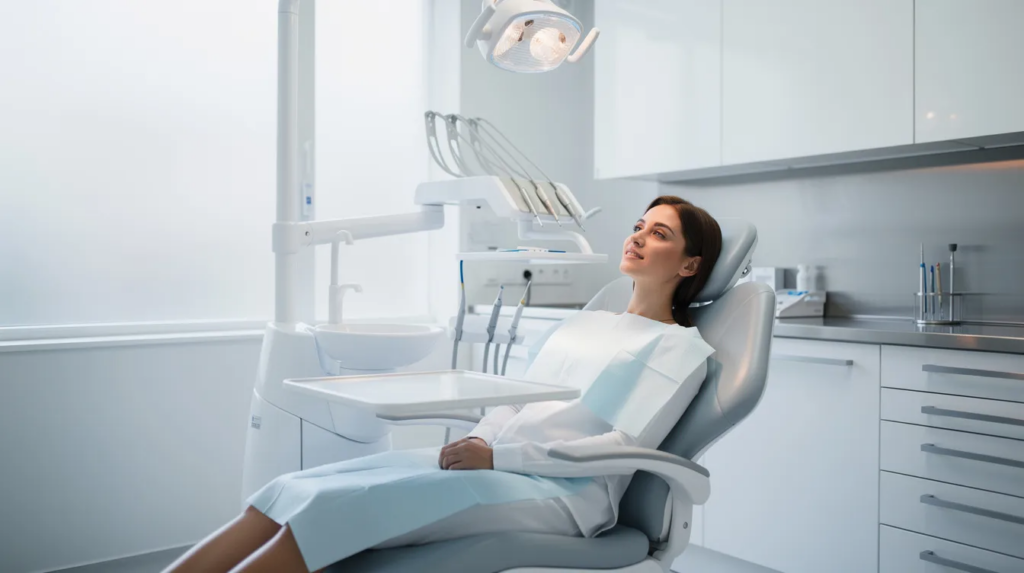
For patients who experience dental anxiety, knowing the steps ahead of time helps. The dental crown procedure is routine and is typically performed with local anesthesia to keep the area comfortable during treatment.
Exam and imaging: Digital X-rays or 3D scans assess the affected tooth, surrounding teeth, and root health.
Treatment plan discussion: The dentist explains what is needed, including whether a root canal or core buildup is required, and reviews costs.
Tooth preparation: Decay and old filling material are removed. The prepared tooth is shaped to accept the crown.
Digital impressions: 3D digital scans replace traditional impressions in crown procedures at Lone Mountain Dental, improving accuracy and patient comfort.
Temporary crown placement: If the permanent crown is made at an outside dental lab, a temporary crown protects the tooth for one to two weeks. Temporary crowns protect teeth while permanent crowns are made.
Final placement: The permanent crown is adjusted for fit, bite, and appearance, then cemented in place.
CEREC same-day crowns may be available in select cases, helping some patients avoid a temporary crown and a second visit. Dental crowns are custom-made to match natural teeth in shade, shape, and translucency, so the final result blends with surrounding teeth.
Precision fit from modern scanning and milling reduces future adjustments, remakes, and emergency visits, which saves money over the life of the permanent restoration.
Types of Crowns and How They Influence Cost and Results
Material choice affects aesthetics, strength, price, and how long the crown lasts. Dental crowns can be made from porcelain, zirconia, or metal, and Lone Mountain Dental customizes recommendations based on each patient’s bite, tooth position, and cosmetic goals.
All-porcelain or ceramic: Often chosen for front teeth or highly visible teeth because they can closely match the appearance of natural teeth.
Zirconia: Known for strength and durability, which can make it a good option for back teeth or patients with heavier bite forces.
Porcelain fused to metal: A versatile option with a metal substructure for strength and a porcelain overlay for appearance.
Full metal: Sometimes used for back molars where strength is the main priority and the crown is less visible.
Many crowns can last 10 years or longer with proper care, though lifespan varies by material, bite forces, oral hygiene, and routine dental visits. Choosing the right material for the tooth’s location and function can help support long-term results.
A cosmetic dentist like Dr. Thomas H. Godfrey considers face shape, bite mechanics, and adjacent teeth color when planning each crown. Patients who prioritize appearance should ask to view before-and-after photos during their consultation to see the difference high-quality materials and design produce.
Why Choosing Lone Mountain Dental Adds Value Beyond the Price Tag
Dental crown cost should be weighed against the experience, technology, and quality of care behind it. Dr. Godfrey, trained at UNLV, brings direct experience in restorative and cosmetic dentistry, endodontics, and implant restorations. Crowns are a core part of his practice, not an occasional procedure.
The office uses digital imaging and CEREC same-day crown technology to help plan restorations with accuracy and comfort in mind. Dr. Godfrey and the Lone Mountain Dental team walk patients through the process, explain treatment options, and review estimated costs before treatment begins.
For patients who experience dental anxiety, the team focuses on calm communication, clear explanations, and helping patients feel informed before treatment begins. Contact Lone Mountain Dental for a personalized dental crown appointment. Call to get a written estimate, verify your insurance benefits, and review payment options before treatment begins.
Preventing Bigger Bills: Early Treatment and Emergency Care
Timing directly affects how much patients spend. Early intervention on cracks, failing fillings, or severe decay with a crown prevents dental emergencies such as fractures, infections, and painful abscesses that cause severe pain.
Delaying treatment for a damaged or weakened tooth can sometimes lead to more complex problems, such as infection, fracture, extraction, or the need for tooth replacement. Regular dental check ups and cleanings remain the most cost-effective way to catch dental concerns early, maintain good oral hygiene, and avoid surprise root canal and crown costs.
Lone Mountain Dental helps patients with urgent dental concerns in Las Vegas, including lost, broken, or painful crowns. If you are experiencing dental pain or damage to a crown, contact the office as soon as possible to discuss appointment availability. The focus is on pain relief and tooth preservation when possible, so patients avoid the escalating costs of delayed care.