Dental Implants in Las Vegas

HomeRestorative Dentistry in Las VegasDental Implants in Las Vegas

Dental Implants Las Vegas

LONE MOUNTAIN DENTAL

lone mountain dental logo

What Are Dental Implants?

Dental implants in Las Vegas offer a permanent way to replace missing teeth using a titanium post that integrates with the jawbone. They restore chewing, speech, and appearance while helping prevent bone loss. Implants can replace a single tooth, multiple teeth, or an entire arch, depending on your needs.

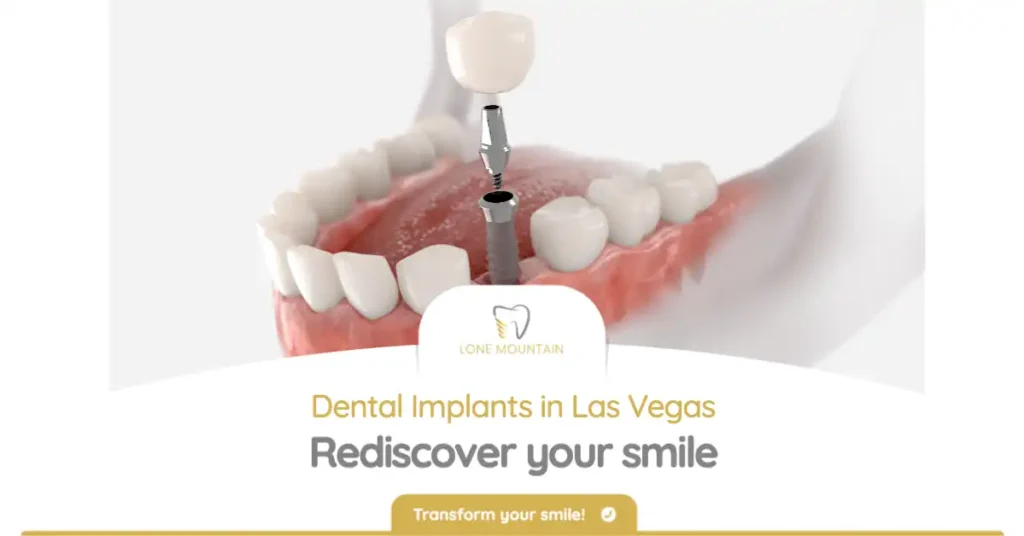
Dental implants are a durable and effective solution for replacing missing teeth. Unlike traditional dentures or bridges that rest on the gums or rely on adjacent teeth, implants integrate directly with the jawbone through a process called osseointegration. This fusion creates a stable foundation for replacement teeth.

The titanium post used in implants is biocompatible, accepted by the body without adverse reactions. Once placed into the jawbone, it gradually fuses with the bone tissue, providing long-term stability. This process restores natural tooth function and helps maintain bone density and facial structure, which can deteriorate after tooth loss.

Implants support various restorations, including single crowns, implant-supported bridges, and full or partial dentures anchored securely in place. They look, feel, and function like natural teeth, enabling patients to eat, speak, and smile confidently.

Dental implants offer a permanent solution that improves oral health and quality of life. They avoid common issues with removable dentures, such as slipping or adhesives, and help preserve the health of remaining teeth and jawbone.

Dental implants in las vegas. Rediscover your smile.

Why Replace Missing Teeth?

Tooth loss impacts more than just appearance. It can affect chewing ability, speech clarity, and self-confidence. Missing teeth may cause changes in diet and nutrition and can lead to social hesitation.

A major consequence is jawbone loss. Teeth roots stimulate the jawbone to maintain density and volume; without this stimulation, bone deteriorates over time, potentially altering facial shape and causing a sunken appearance. Bone loss also affects denture fit and comfort.

Surrounding teeth may shift into the empty space, leading to misalignment, bite problems, and increased wear on remaining teeth.

Dental implants uniquely prevent bone loss by mimicking natural tooth roots. The titanium post stimulates the jawbone, preserving bone density and facial structure. Choosing implants helps restore function and aesthetics while protecting long-term oral health.

Who Is a Candidate for Dental Implants?

Candidates include individuals missing one tooth, several teeth, or an entire arch. Healthy gums and overall oral health are necessary to support implant placement and healing. Adequate jawbone density is crucial, but bone grafting can help patients with insufficient bone qualify.

Existing periodontal disease must be treated before implant surgery to ensure a healthy environment. Certain medical conditions, such as uncontrolled diabetes or smoking, may affect healing and success rates. These factors are assessed during consultation to create a personalized treatment plan.

A comprehensive consultation with a dental implant specialist includes an oral exam, imaging (digital X-rays or CT scans), and medical history review. This evaluation helps tailor the treatment plan to the patient’s needs.

A consultation is the best way to determine if dental implants are right for you.

READY TO IMPROVE YOUR SMILE?
Contact us with any questions or to schedule an appointment. Our caring and dedicated staff can't wait to hear from you!

Types of Dental Implant Solutions

Single Tooth Dental Implants

  • Replace one missing tooth

  • Independent from adjacent teeth

Single tooth implants are ideal for replacing one tooth without affecting neighboring teeth. Unlike traditional bridges, they preserve surrounding teeth’s health and prevent bone loss.

Implant-Supported Bridges

  • Replace several missing teeth

  • No reliance on natural neighboring teeth

Implant-supported bridges use strategically placed implants to support a bridge, avoiding alteration of healthy teeth. They offer greater durability and comfort than traditional bridges.

Implant-Supported Dentures

  • Fixed or removable options

  • Improved stability over traditional dentures

For patients missing many teeth or a full arch, implant-supported dentures attach securely to implants, improving chewing ability and confidence. They can be fixed or removable based on patient preference.

Full-Arch Dental Implants

  • Entire arch replacement

  • Options may include All-on-4 / All-on-6 (case dependent)

Full-arch implants replace all teeth in the upper or lower jaw using four to six implants. Techniques like All-on-4 place implants at angles to maximize support, often avoiding bone grafting. This provides a fixed, natural-looking smile and a cost-effective alternative to dentures.

With dental implants, people are rediscovering the comfort and confidence to eat, speak, laugh and enjoy life.

Traditional Dental Implants vs Mini Dental Implants

Traditional implants are larger and require sufficient bone density. They support a range of restorations and offer long-term stability.

Mini dental implants are smaller, less invasive, and require less bone, making them suitable for patients with bone loss or those unable to undergo bone grafting. They often result in shorter treatment times and quicker recovery.

Mini implants commonly stabilize loose dentures or replace single teeth in limited spaces but may not be suitable for multiple teeth or areas with high chewing forces. Traditional implants remain preferred for those needs.

A dental implant specialist will evaluate oral health and bone density to recommend the best option. Both types aim to restore a confident smile and improve oral function.

The Dental Implant Process

The process starts with a consultation where oral health and goals are evaluated. Advanced imaging like digital X-rays and CT scans help plan precise implant placement.

During surgery, a titanium post is inserted into the jawbone under local anesthesia, with sedation options available for comfort. The implant acts as an artificial tooth root.

Healing involves osseointegration, where the bone fuses with the implant, usually taking three to six months. Temporary teeth may be provided during healing.

Once stable, an abutment is attached to support a permanent crown, custom-made to match natural teeth.

Timelines vary based on bone density, health, and additional procedures like bone grafting. Your dental team will provide a personalized plan and clear expectations for a smooth treatment.

Do Dental Implants Hurt?

Dental implant surgery is generally well tolerated with modern anesthesia and sedation options. Local anesthesia numbs the area, and IV sedation is available for anxiety or extensive procedures.

Some post-surgery soreness and swelling are normal but typically resolve within days and can be managed with over-the-counter pain relief. Minimally invasive techniques often lead to faster recovery than traditional surgeries.

Many patients resume normal activities within a day or two. Detailed post-operative instructions help ensure optimal healing.

Choosing an experienced specialist using advanced technology and sedation can reduce discomfort and anxiety.

Same-Day Dental Implants & Immediate Teeth

Same-day dental implants allow placement of implants and temporary teeth in one visit, offering immediate results and reducing treatment time. However, immediate loading is evaluated case-by-case and may not be clinically appropriate for all patients.

Temporary teeth provide function and aesthetics during healing, protecting implant sites and supporting soft tissue.

Patients with insufficient bone quality, significant bone loss, or complex oral health issues may require traditional two-stage procedures with a healing period before final restorations.

Your dental team will guide you to the best treatment for long-term success.

How Long Do Dental Implants Last?

Dental implants are designed to last many years, often a lifetime. The titanium post integrates with the jawbone, resisting decay and deterioration.

Crowns or prosthetics attached to implants may need replacement over time due to wear. Oral hygiene, diet, and habits like grinding affect longevity.

Regular brushing, flossing, and professional cleanings prevent gum disease and complications.

Routine dental visits monitor implant health and catch issues early. With proper care, implants offer a durable, cost-effective tooth replacement.

Dental Implants vs Dentures

  • Stability: Implants anchor into the jawbone, preventing movement during eating or speaking. Dentures rely on suction or adhesives and may slip.

  • Bone preservation: Implants stimulate the jawbone, preventing bone loss. Dentures do not, which can alter facial structure over time.

  • Eating & speaking confidence: Implants restore chewing efficiency and clear speech. Dentures may cause pronunciation challenges and require adjustments.

  • Maintenance: Implants require brushing, flossing, and routine cleanings. Dentures need removal for cleaning and periodic adjustments.

Cost, Insurance, and Financing for Dental Implants

Costs vary based on the number of implants, additional procedures like bone grafting, and restoration type.

Many insurance plans offer some coverage; check with your provider and our front desk to understand benefits. Lone Mountain Dental works with numerous plans to help maximize coverage.

Affordable payment plans and financing options are available to spread costs over time.

A consultation provides an accurate estimate tailored to your needs.

Investing in implants offers long-term savings by preventing bone loss and preserving remaining teeth.

A consultation is the best way to understand your treatment options and costs.

Why Choose Lone Mountain Dental for Dental Implants

Lone Mountain Dental prioritizes personalized care tailored to your needs. We recommend implants only when clinically appropriate.

Our advanced imaging (digital X-rays, 3D CT scans) enables precise planning to optimize outcomes.

Our team provides clear communication and a comfortable experience from consultation to post-care.

We focus on transparency and ethical treatment recommendations.

Caring for Dental Implants

  • Brushing & flossing: Clean implants twice daily with a soft toothbrush and floss to prevent plaque and gum inflammation.

  • Routine dental visits: Regular checkups and cleanings monitor implant health and detect peri-implant disease early.

  • Avoid smoking: Smoking impairs healing and increases implant failure risk.

  • Long-term maintenance: Healthy lifestyle, balanced diet, and avoiding excessive forces help implant durability.

Schedule a Dental Implant Consultation in Las Vegas

Considering dental implants? Schedule a consultation with Lone Mountain Dental to evaluate your oral health and goals.

We offer convenient online and phone scheduling.

Our team will guide you through the procedure, answer questions, and provide transparent information on costs, insurance, and payment plans.

Take the first step toward a brand new, confident smile by scheduling your free consultation today. Meet Dr. Godfrey and our dedicated team committed to exceptional dental implant care in Las Vegas, NV.

READY TO IMPROVE YOUR SMILE?
Contact us with any questions or to schedule an appointment. Our caring and dedicated staff can't wait to hear from you!
patient reviews

Google Reviews

© 2024 All rights reserved.

Scroll to top
Call Now!